








































Australia’s New Refugee Student Pathway that Changes Lives
Australia launches a new Refugee Student Pathway, giving displaced youth the chance to study, settle, and build a future through education and opportunity.

A young refugee has become the first to arrive in Australia under a new humanitarian education program that aims to give displaced students a chance to study, settle, and build their lives in safety.
At 24 years old, he describes the moment his plane landed in Melbourne as the end of a long “pause” on his life. For years, he says, his future had been uncertain — caught between the loss of his home country and the legal restrictions of life as a refugee abroad.
“I couldn’t really go on with my life,” he said shortly after arriving. “Everything was on hold. But now I know that I have an opportunity. If I put in the work, I’ll see the results.”
He is the first of 20 participants selected for a pilot initiative known as the Refugee Student Settlement Pathway (RSSP) — a program that could reshape how Australia welcomes young refugees who show academic potential.
From Conflict to Uncertainty
The student’s story mirrors that of millions displaced by protracted conflicts across the Middle East. His family fled their homeland in 2017 after a devastating civil war made daily life impossible.
“The necessities to live were gone,” he recalled. “There was no running water, no electricity. When armed groups took over the capital, we moved from one city to another, but it never felt safe. Eventually, my parents decided we had no choice but to leave.”
With few options, the family sought refuge in Malaysia — one of the few countries that allowed them entry without a pre-arranged visa. He was 16 at the time.
But while Malaysia provided physical safety, it offered little in terms of stability or rights. Refugees there are not legally recognized, leaving them unable to work, study in formal institutions, or travel. “You can register with the UNHCR,” he explained, “but you don’t have legal status. You can’t work, you can’t go to school, and you can’t leave. You’re safe, but stuck.”
For years, the family lived in this state of limbo — unable to return home, but without a clear path forward.
Education as a Lifeline
Despite the constraints, the young man refused to abandon his education. Supported by a relative overseas, he enrolled in a biotechnology program at a Malaysian university — one of the few private institutions that admitted refugees under special circumstances.
He excelled academically, completing his degree with distinction. Yet when his classmates graduated and began professional careers, his path ended abruptly. As a refugee, he was barred from formal employment.
“I could study, but I couldn’t use what I’d learned,” he said. “My education became a dream I couldn’t live.”
For him, the arrival in Australia represents not just a change of place, but the revival of that dream. Under the RSSP, he will begin a Master’s in Biotechnology at an Australian university in 2026.
“I’ve always been interested in how biotechnology can change lives,” he said. “Gene therapy and genetic engineering have the potential to cure diseases we once thought were incurable — and even to prevent them. That’s what drives me.”
A Pilot Program with Big Ambitions
The Refugee Student Settlement Pathway is the first of its kind in Australia — a community-driven pilot designed to provide tertiary education and permanent resettlement opportunities to refugees aged 18 to 30.
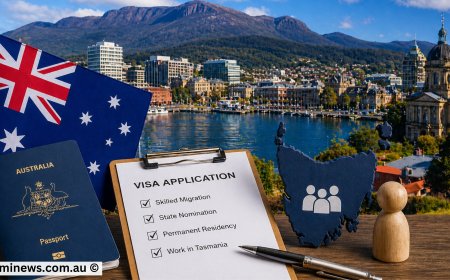
Under the program, selected participants are granted Special Humanitarian Visas, allowing them to live, study, and work in Australia permanently. The pilot is included within the government’s annual humanitarian intake, which allocates 20,000 places for 2024–25.
According to the government’s Humanitarian Program 2025–26 Discussion Paper, the pathway “tests a new community sponsorship model that empowers non-traditional actors in refugee protection, including universities, to play an active role in settlement.”
The approach marks a significant shift in how Australia engages with displaced populations — integrating academic institutions, not-for-profits, and communities into the refugee resettlement process.
How It Works
The concept for the RSSP was developed through collaboration between Australian non-profit organizations specializing in refugee education and skills development. The program’s founders proposed a model in which universities could directly sponsor and support refugee students, providing both academic opportunities and pathways to permanent settlement.
Eligible applicants — refugees recognized by the UNHCR and residing in transit countries such as Malaysia, India, or Thailand — were invited to apply for the first intake. They were assessed based on academic achievement, English proficiency, and their potential to contribute to fields experiencing skill shortages in Australia, including healthcare, engineering, technology, and business.
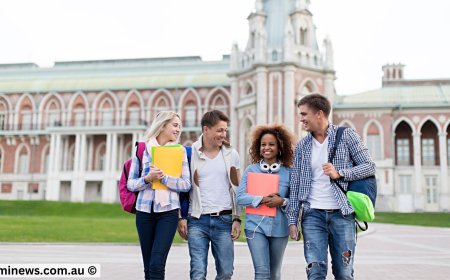
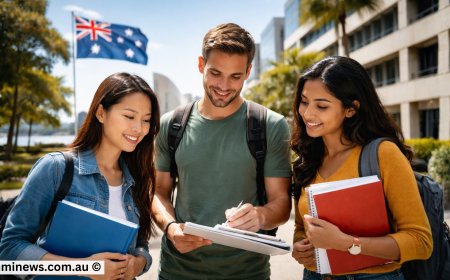
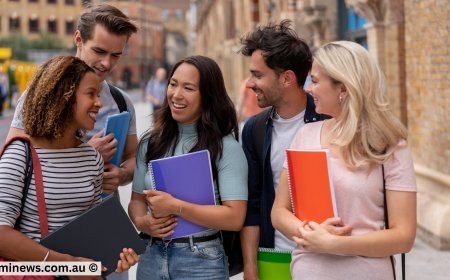
Students selected under the RSSP are matched with Australian universities offering programs aligned with their academic background and career goals. Upon arrival, they are welcomed by both university staff and student volunteer groups, who assist them with orientation, housing, and social integration.
“This model allows us to identify promising students who are stuck — unable to continue their studies or settle where they are, and unable to go home,” said one program coordinator. “By partnering with the government, we can bring them to Australia on a permanent visa, so they can study as domestic students and stay here long term.”
The program also emphasizes community involvement. Each participant is paired with a host family or local support network, helping them navigate daily life, from public transport to healthcare.
A Warm Welcome and a New Start
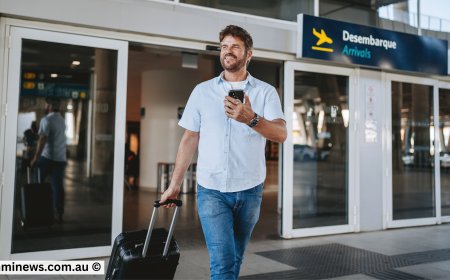
When the young refugee arrived in Melbourne earlier this month, he was greeted at the airport by a group of university students who had volunteered to form part of his welcome committee. He described the experience as “overwhelmingly warm.”
“I didn’t expect so many people to be there,” he said. “It made me feel like I belonged from the first moment.”
He has since moved in with a host family near the university campus and begun the process of settling into life in Australia — setting up a bank account, exploring the city, and preparing for his studies.
The adjustment, he admits, will take time. “Everything is new — the culture, the weather, even how people talk,” he laughed. “But I’m ready to learn.”
His family remains in Malaysia, but he says they are overjoyed to see him finally have a chance to build a stable future. “They’re happy for me,” he said. “They know this is what we’ve all been hoping for — a place to belong.”
Learning from Global Models
Australia’s Refugee Student Settlement Pathway draws inspiration from Canada’s Student Refugee Program, a long-running initiative that has successfully resettled thousands of refugee students since its creation in the 1970s.
Canadian universities and student associations play a central role in funding and supporting refugee scholars for their first year of study, after which the students continue independently.
Australian program architects say Canada’s model provided “a wealth of knowledge” about what works — particularly around community integration and student support structures.
“Importantly, when students arrive, they’re not alone,” said one program leader. “They’re welcomed by the university, which offers institutional support, and by student or alumni groups who volunteer to help them settle in. It’s very much community-led.”
Potential Long-Term Impact
Experts in migration and higher education say the RSSP could help reshape how Australia balances humanitarian and skilled migration priorities.
Former senior immigration officials have suggested that such programs not only provide a lifeline for individuals in refugee transit countries but may also reduce the incentive for dangerous sea journeys.
“This acts as a method of reducing irregular migration,” one expert said. “If people know there’s a legitimate, structured pathway to Australia that recognizes both their refugee status and their educational potential, they’re less likely to take unsafe routes.”
However, experts also caution that strong support systems will be essential to ensure the success of participants once they arrive. “These students will need English-language training, employment support, and protection from exploitation,” said one former government advisor. “If we invest properly in those areas, the program can deliver both humanitarian and economic benefits.”
The Government’s Position
The Australian government has expressed cautious optimism about the pilot. The Minister for Home Affairs described the initiative as “transformative,” emphasizing that it reflects the country’s broader humanitarian values.
“We’re a good country,” the minister said in a recent statement. “For these students, this opportunity will be life-changing.”
According to government documents, future intakes under the RSSP will be considered annually, based on outcomes from the pilot phase. The long-term goal is to gather enough evidence to determine whether the model could become a permanent feature of Australia’s humanitarian program.
Bridging Humanitarian and Economic Goals
While the RSSP is primarily a humanitarian initiative, it also addresses Australia’s growing demand for skilled workers — particularly in sectors like biotechnology, engineering, and healthcare.
By aligning refugee education opportunities with national workforce needs, the program offers what policy analysts describe as a “dual benefit” model: providing refuge to displaced youth while contributing to the local economy.
“This is a pragmatic humanitarian policy,” one analyst said. “It recognizes that refugees aren’t just recipients of aid — they’re individuals with skills, ambitions, and potential to contribute.”
A Future of Possibility
For the student who arrived in Melbourne, the program represents a long-awaited turning point. After nearly a decade of living in limbo, he finally has the chance to move forward — to study, to work, and to belong.
He says his long-term goal is to contribute to medical research, particularly in genetic therapies that could improve health outcomes in communities worldwide.
“I want to use what I’ve learned to make a difference,” he said. “Biotechnology can change the future of medicine — and I want to be part of that change.”
As he prepares to begin his master’s program next year, he reflects on the years spent waiting — and the moment he finally stepped onto Australian soil.
“We left home looking for a better place, a place we could call home,” he said. “Now, I think I’ve found it.”
Looking Ahead
If successful, the Refugee Student Settlement Pathway could expand to include hundreds of refugee students each year, supported by universities and communities across Australia. Advocates hope the pilot will prove that humanitarian programs and higher education can work hand-in-hand to produce outcomes that are both compassionate and sustainable.
“This program isn’t just about giving people safety,” said one of its architects. “It’s about giving them the tools to thrive — to contribute to the society that welcomes them.”
For the young student in Melbourne, that opportunity has already begun. After years of uncertainty, he now looks toward a future defined not by borders, but by possibility.
Tags:
What's Your Reaction?
Like
0
Dislike
0
Love
0
Funny
0
Angry
0
Sad
0
Wow
0