

















































































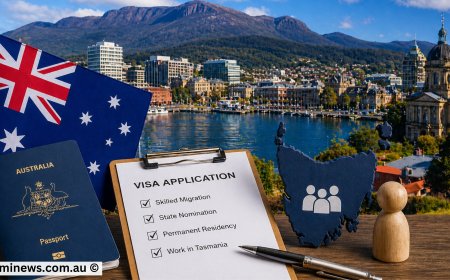




Migrants Shock Australia With Call to Cut Immigration
Survey reveals migrants now support cutting Australia immigration levels, raising concerns over visas, housing, and migration policy reforms.

Poll shock migrants demand big migration cut has become a defining headline in Australia immigration debates. A recent national survey reveals that even first generation migrants now support reducing Australia migration levels. This shift challenges long held assumptions about migrant perspectives and highlights growing pressure on policymakers. With record high arrivals and increasing strain on infrastructure, the conversation around Australia visa policies is evolving quickly. The issue now sits at the center of economic planning, social cohesion, and long term national strategy.
Significance of Poll shock migrants demand big migration cut
Strong consensus across diverse groups


The survey shows 79 percent of Australians want migration intake capped at 100,000 or less. This includes 75 percent of first generation migrants and 74 percent of non citizens, showing alignment across demographics.
This level of agreement signals a structural shift in public opinion and creates pressure for reforms in Australia immigration policy that reflect broader consensus rather than niche political positions.
Migration concerns linked to infrastructure strain
Many respondents connect high Australia migration levels with housing shortages, transport congestion, and public service pressure. With net arrivals reaching nearly 494,540 in a year, infrastructure development has not kept pace.
For deeper insight into how migration policies are already being adjusted at regional levels on Tasmania’s skilled migration changes.
This reflects how states are reacting to capacity challenges in real time.
Shift in migrant sentiment toward controlled intake
A key finding is that migrants themselves now support reduced intake. Around 59 percent of first generation migrants believe there are too many migrants in Australia.
This shift matters because it reflects lived experience. Migrants are directly impacted by housing affordability, job competition, and access to services, making their views highly practical and grounded.
Growing demand for values based migration system
About 77 percent of Australians support requiring migrants to commit to Australian values and face deportation if they fail to comply. This indicates a shift toward quality focused Australia visa frameworks.


Such expectations can reshape visa eligibility criteria, with more emphasis on integration, language ability, and cultural alignment rather than only economic contribution.
Rising distrust in migration policymaking
Nearly 48 percent of Australians believe migration policies may be politically influenced to secure electoral advantage. Only 22 percent disagree with this view.
This reflects declining trust in governance and highlights the need for transparent, data driven Australia immigration strategies that align with national interest rather than short term gains.
Economic and social identity concerns
Around 54 percent of Australians say they no longer recognise the country they grew up in. This sentiment spans across political affiliations and age groups.
It signals that migration is no longer just an economic issue. It now intersects with identity, cultural continuity, and national cohesion, which makes policy decisions more complex and sensitive.
External validation of migration trends
Independent research and analysis further support the scale of migration challenges. You can explore detailed data and perspectives through high authority source.
Such sources strengthen the credibility of discussions and provide evidence based backing to public sentiment.
Impact on Australia visa policy direction
The strong public support for reduced migration is likely to influence future Australia visa policies. Governments may prioritize skilled migration caps, stricter eligibility criteria, and regional allocation strategies.
Policy adjustments could also include slower processing of certain visa categories and tighter compliance monitoring to ensure migrants meet defined standards.
Labour market recalibration
While migration supports workforce needs, excessive intake can distort labour markets. Oversupply in certain sectors may reduce wage growth and increase underemployment among both migrants and local workers.
A controlled Australia migration approach allows better alignment between labour demand and supply, ensuring economic stability and fair employment conditions.
Regional migration strategies gaining importance
States and territories are already adjusting migration intake based on local capacity. Tasmania’s pause on some skilled migration invitations is one example of targeted control.
This approach may expand across Australia, with regions setting their own thresholds based on infrastructure, housing, and economic needs.
Long term planning and sustainability
The survey results emphasize the need for sustainable migration planning. High intake without matching infrastructure investment leads to systemic stress.
Future Australia immigration strategies must integrate housing development, transport expansion, and healthcare capacity planning to ensure balanced growth.
What's Your Reaction?
 Like
0
Like
0
 Dislike
0
Dislike
0
 Love
0
Love
0
 Funny
0
Funny
0
 Angry
0
Angry
0
 Sad
0
Sad
0
 Wow
0
Wow
0